
CBT - Understand and change the thoughts and behaviours that keep you stuck
CBT - Understand and change the thoughts and behaviours that keep you stuck
What is CBT?
CBT is a talking therapy but is composed of techniques and strategies which can help to maintain your mental health over time. If you prefer the idea of a more structured therapy, then this is for you. The number of sessions will vary from person to person, but over time you will build your knowledge, allowing you to understand how some of your thoughts and actions are keeping you trapped in an unhappy, threatening or turbulent place.
CBT consistently shows itself to be amongst the most effective therapies for anxiety-based problems and is cited by The National Institute for Health and Care Excellence (NICE) as the therapy of choice for many of these disorders. It is used daily throughout the NHS psychological services.
You will learn both cognitive and behavioural strategies (such as helping you to spot and address your unhelpful thinking and techniques addressing anxiety management) as well as more targeted strategies which help in the treatment of diagnoses such as Obsessive Compulsive Disorder (OCD) and Post Traumatic Stress Disorder (PTSD). Being an accredited member of the BABCP means that you can trust that any intervention is evidence based and tailored for what you need. The number of sessions will vary depending on your diagnosis and how you progress, but on average range from between 6-20.
How CBT Works?
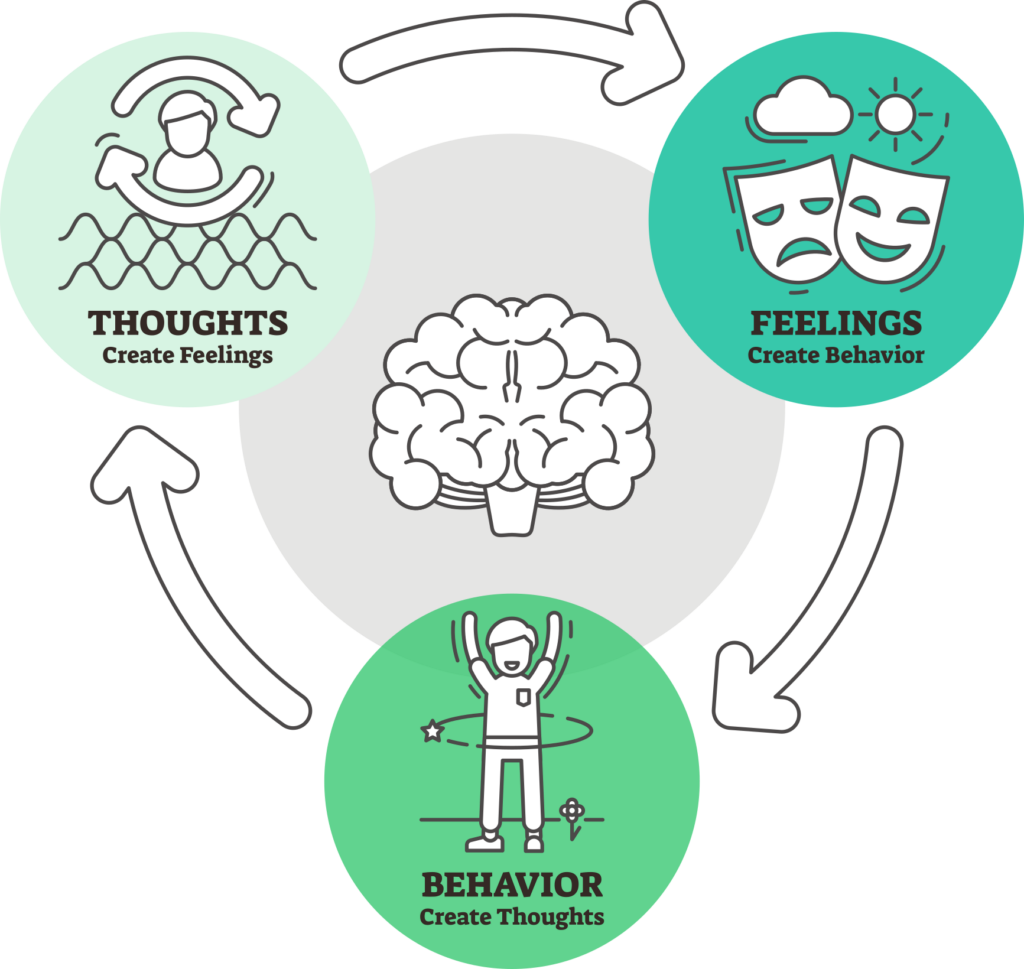
CBT sessions follow a structured, collaborative approach designed to help you understand and change patterns that are maintaining your difficulties.
The initial sessions focus on understanding your current difficulties, identifying how your thoughts, emotions, and behaviours interact, and agreeing clear goals for therapy. Together, we develop a shared understanding of what is keeping the problem going.
Subsequent sessions typically include two key elements:
Cognitive Work
We explore unhelpful or unbalanced thinking patterns and beliefs that may be contributing to distress. You will learn how to recognise these thoughts, evaluate them, and develop more balanced and helpful ways of thinking.
Behavioural Strategies
CBT also focuses on what you do, not just what you think. This may include behavioural experiments, graded exposure, or practical strategies to reduce avoidance and anxiety. These techniques help you test out new ways of responding and build confidence over time.
Between sessions, you may be encouraged to practise skills or reflect on what you have learned, helping to reinforce progress and support long-term change.
The number of sessions will vary depending on your difficulties and progress, but CBT is usually delivered as a time-limited, evidence-based therapy tailored to your individual needs.
CBT may be helpful if you are experiencing:
- Anxiety disorders, including panic and health anxiety
- Depression or low mood
- Obsessive Compulsive Disorder (OCD)
- Post-Traumatic Stress Disorder (PTSD)
- Ongoing stress or difficulty coping
- Low confidence or self-esteem
CBT is especially suited to people who prefer a structured, practical approach to therapy and want to better understand how their thoughts and behaviours are contributing to their difficulties. It focuses on developing skills and strategies that can be used both during therapy and long after sessions have ended.